
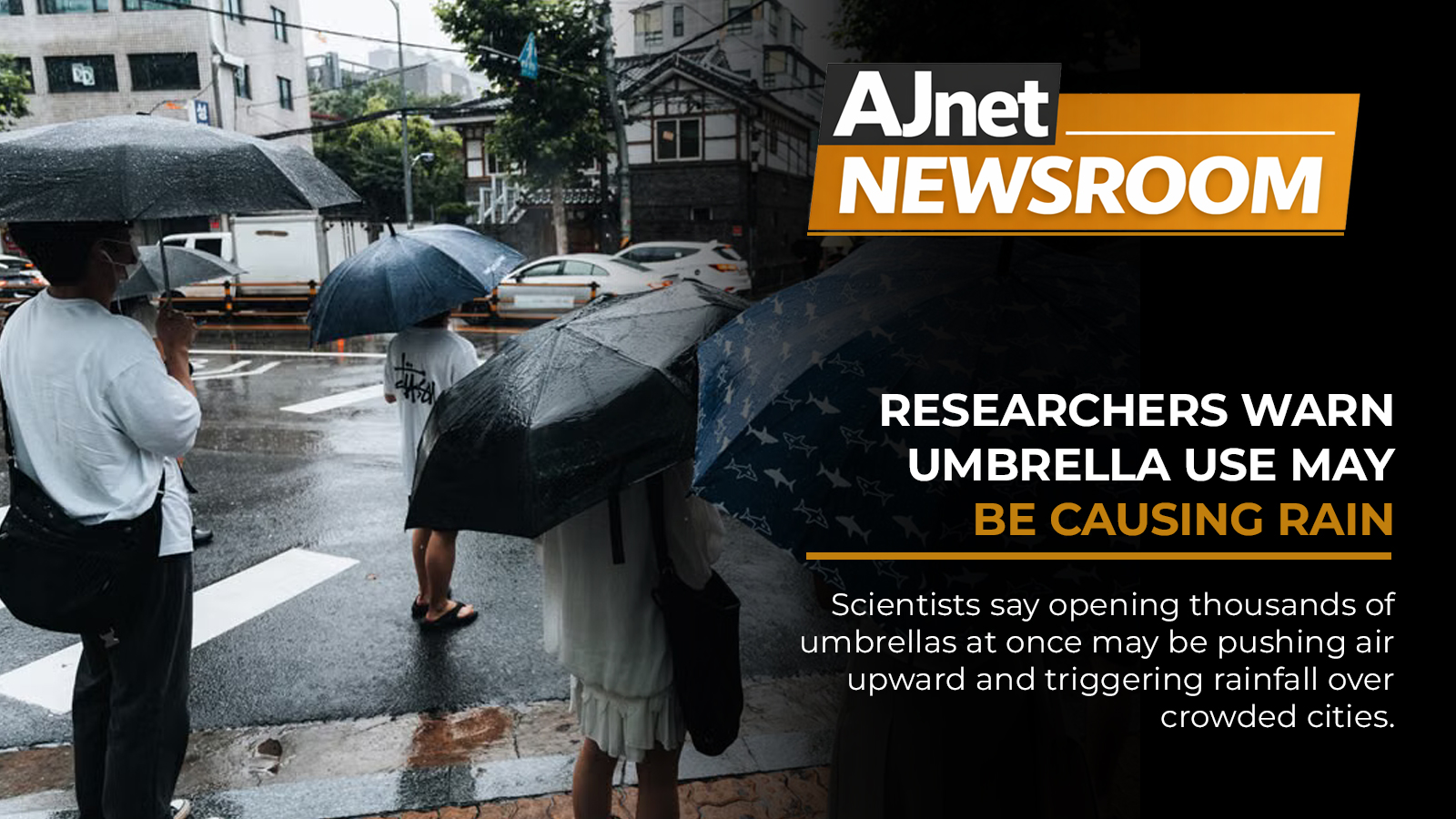
Umbrellas may be contributing to increased rainfall in major American cities, according to a new study released by researchers in Chicago.
The study, conducted by the Great Lakes Center for Atmospheric Research, found that rainfall was significantly more common in areas where large numbers of people were carrying umbrellas. Researchers monitored pedestrian activity and weather conditions in 14 cities over a six-year period, documenting more than 180,000 individual umbrella sightings.
Dr. Malcolm Vickers, the study’s lead researcher, said the results showed a clear relationship between umbrella use and precipitation.
“We found that rain occurred within one hour of concentrated umbrella activity in approximately 94 percent of cases,” Vickers said. “The correlation is far too strong to ignore. Wherever umbrellas appeared in significant numbers, rainfall almost always followed.”
Researchers stationed observers in downtown areas of Chicago, New York, Boston, Baltimore, Seattle, and several other cities. The observers counted umbrellas while monitoring changes in temperature, humidity, wind speed, and cloud cover.
According to the report, rainfall was rare when fewer than five umbrellas were visible within a two-block radius. Once that number exceeded 20, however, the likelihood of measurable precipitation increased sharply.
The study found that neighborhoods with more than 50 active umbrellas experienced rain in 98 percent of recorded observations.
Vickers believes umbrellas may affect localized atmospheric conditions by disturbing air currents above heavily populated sidewalks.
“When hundreds of umbrellas open at approximately the same time, they displace a substantial amount of air,” Vickers explained. “That air has to go somewhere. Our working theory is that the upward displacement contributes to cloud compression, which may encourage moisture to fall.”
The effect may be particularly strong in urban areas, where tall buildings restrict horizontal airflow. Researchers believe umbrellas could redirect air upward between buildings, producing what the report describes as a “pedestrian-assisted precipitation channel.”
Larger umbrellas were associated with heavier rainfall. Compact folding models were most commonly linked to drizzle, while full-sized golf umbrellas frequently appeared before thunderstorms and prolonged downpours.
The study also found that umbrellas made from darker materials were associated with slightly higher rainfall totals than brightly colored umbrellas. Researchers have not determined why color would influence the effect, though Vickers said heat absorption may be involved.
“Black umbrellas absorb more solar radiation,” Vickers said. “That could produce small pockets of warm air beneath the canopy. When enough of those pockets form in one location, they may interact with cooler air above the street.”
Not all meteorologists accept the researchers’ conclusion.
Dr. Laura Kim, an atmospheric scientist at the University of Wisconsin, said the study appears to reverse the relationship between umbrellas and rain.
“People carry umbrellas because they expect rain,” Kim said. “They look at the forecast, see dark clouds, or feel drops beginning to fall. The umbrellas are responding to the weather. They are not creating it.”
Kim said the researchers had documented an obvious correlation but had presented no evidence that umbrellas caused changes in the atmosphere.
“If you conducted a study outside hospitals, you would find a strong correlation between ambulances and medical emergencies,” Kim said. “That would not mean the ambulances were causing people to become sick.”
Vickers rejected the criticism, saying traditional meteorologists were unwilling to consider evidence that challenged established assumptions.
“For generations, scientists have simply accepted that rain causes umbrellas,” Vickers said. “Very few have been willing to ask whether umbrellas might cause rain. That kind of institutional thinking prevents scientific progress.”
He also questioned why rain sometimes begins shortly after people open umbrellas, rather than immediately beforehand.
“If umbrellas are only a response to rainfall, why do people frequently open them several seconds before the first drops reach the ground?” Vickers asked. “That delay deserves serious examination.”
Researchers said advance weather forecasts do not fully explain the results. In several cases, large numbers of umbrellas appeared even when rain was not predicted. Rainfall still occurred shortly afterward, which Vickers believes strengthens the possibility of a causal relationship.
One such incident occurred last April in downtown Chicago. Weather forecasts called for cloudy but dry conditions, yet hundreds of pedestrians arrived carrying umbrellas during the morning commute. Rain began at approximately 8:17 a.m. and continued for nearly three hours.
Coffee shop manager Denise Holloway remembered the sudden change in weather.
“It was dry when I got to work, but everybody was walking around with umbrellas,” Holloway said. “About 20 minutes later, it started pouring. I remember thinking the weather report really missed that one.”
Holloway said she had never considered that the umbrellas themselves might have contributed to the rain.
“I always assumed people brought them because they saw the clouds,” she said. “But there were a lot of umbrellas out there that morning. I suppose that much activity could do something.”
The report has already attracted attention from Chicago officials, who are reviewing whether umbrella use should be included in future weather and infrastructure planning.
A spokesperson for the Chicago Department of Environment said the city was examining the findings and had not ruled out additional research.
“We are not proposing any immediate restrictions,” the spokesperson said. “However, if further studies confirm that umbrellas contribute to localized rainfall, the city may need to explore reasonable mitigation measures.”
Possible measures could include limits on oversized umbrellas in crowded commercial districts, designated umbrella-free zones, and public education campaigns encouraging residents to wait until rainfall begins before opening them.
City officials are also considering a pilot program that would ask commuters to stagger umbrella deployment during major storms. Under the proposal, pedestrians on alternating blocks would delay opening their umbrellas for several minutes in an effort to reduce sudden air displacement.
Umbrella retailers have expressed concern about the findings.
Martin Ellis, owner of Rain Ready, a Chicago store specializing in umbrellas and waterproof clothing, said restrictions could unfairly damage local businesses.
“People need protection from the weather,” Ellis said. “If it is raining, they are going to use umbrellas. Telling people not to open them because they might make it rain harder puts them in an impossible position.”
Vickers said he was not calling for a complete ban. He believes smaller umbrellas and raincoats may offer safer alternatives while researchers continue studying the issue.
The Great Lakes Center for Atmospheric Research plans to begin controlled testing later this year. Researchers will open several hundred umbrellas inside an outdoor testing area near Lake Michigan and monitor nearby cloud activity.
Until those tests are complete, Vickers advised the public to use umbrellas responsibly.
“People should not panic,” he said. “An individual umbrella is unlikely to cause a storm. The concern is what happens when thousands of people open them together without considering the atmospheric consequences.”

More from Troy Jackson


Don't miss any new posts. Join AJnet Magazine's mailing list and receive updates straight to your inbox once a week!