
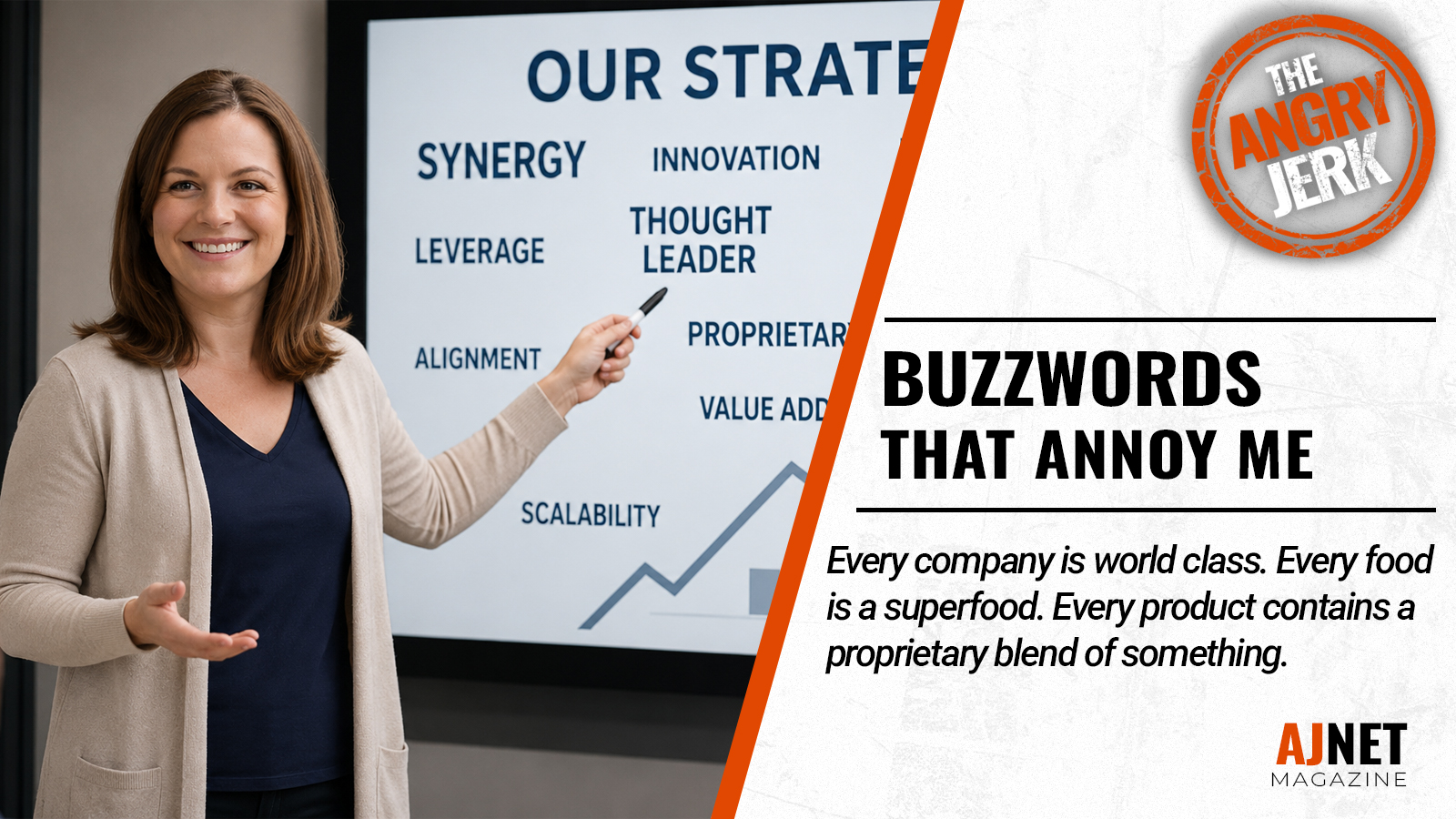
I hate buzzwords.
They’re everywhere now. Half the world seems to communicate exclusively through meaningless buzzwords that sound impressive but don’t actually say anything. Nobody seems to know what any of these words really mean anymore.
Somewhere along the line, society collectively decided that sounding smart was more important than actually being understood. So instead of speaking normal English, everybody started stuffing conversations full of corporate jargon, marketing terms, and trendy internet phrases. If you question what any of them mean, people either get defensive or start parroting definitions they copied from Google without understanding them themselves.
I’m tired of hearing these words thrown around by people who have no idea what they’re talking about, so here’s a few buzzwords that annoy the absolute shit out of me.
I’m feeling kind of lazy on this one, so you know what that means.
That’s right, we’re doing a listicle.
Antioxidants
What the fuck is an antioxidant?
No seriously, explain it to me.
Every food on Earth apparently contains antioxidants. Everything from berries to tea, to dark chocolate, to spinach is touted as being high in antioxidants. If a company could somehow shove antioxidants into drywall they’d probably advertise that too.
Everyone agrees antioxidants are healthy, but whenever I ask somebody what they actually do, I can never get a straight answer, and the conversation immediately turns into a science lecture about “free radicals” and “oxidative stress”. Great, now explain what the fuck that actually means.
I don’t need the explanation written for a college chemistry class. Tell me exactly what antioxidants do for my body in practical terms. Explain that shit to me like I’m a developmentally disabled five-year-old. Am I going to live longer? Am I going to recover faster? Am I going to feel better? What tangible benefit am I getting from them?
For fun, I ran it through Google, and specifically chose “What do antioxidants do for dummies?”. This is the “for dummies” explanation Google went with:
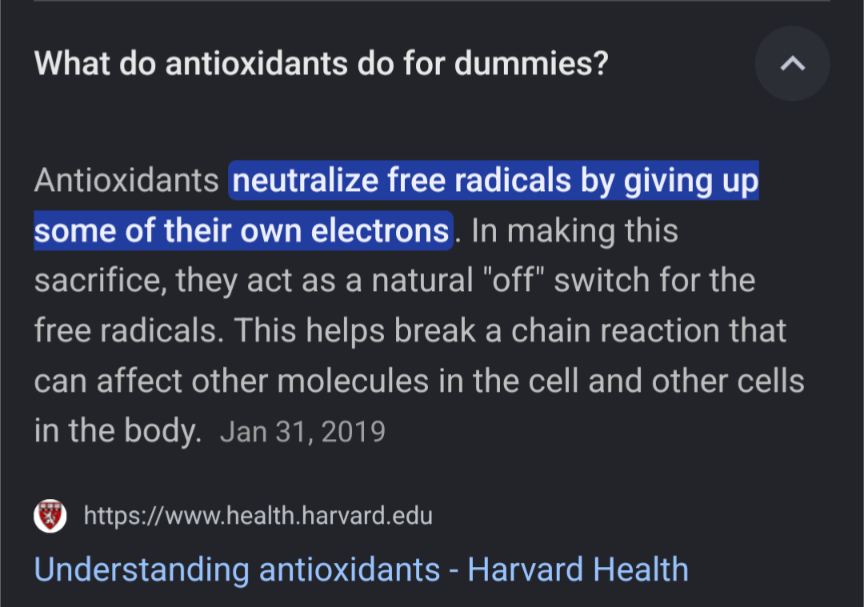
Apparently even dummies now have biochemistry knowledge. I must be a real moron.
Maybe antioxidants really are important. I’m willing to concede that possibility. The problem is that every explanation sounds like somebody reciting their college thesis study. If something is genuinely important, it shouldn’t require a dictionary, a chemistry textbook, and three YouTube videos just to understand the basic benefit.
Until somebody can explain antioxidants without using the words “free radicals” or “oxidative stress,” I’m going to continue viewing them as a marketing term that’s mostly used to justify charging me extra money for blueberries.
Superfoods
Speaking of health buzzwords, let’s talk about superfoods.
What exactly makes a food a superfood?
Is there some governing body somewhere handing out superhero licenses to vegetables? Does kale wear a cape? Can quinoa fly?
Every time I hear the term “superfood”, it seems to refer to some perfectly normal food that health influencers recently discovered. It’s never something exciting either. It’s always some grain, seed, berry, or leafy green that apparently contains slightly more nutrients than some other grain, seed, berry, or leafy green.
Quinoa is a great example.
Quinoa is nutritious, and a perfectly reasonable substitute for rice. But people talk about it like it’s the Holy Grail. You’d think eating a bowl of the stuff would cure male pattern baldness and let you bench press a Honda Civic. It definitely doesn’t, because my bald ass can barely bench 2-plate.
It’s the same tired shit every few years. Blueberries are a superfood. Then kale is a superfood. Then acai berries are a superfood. Then chia seeds are a superfood. Then somebody discovers a plant that’s been growing on the side of a mountain in South America for thousands of years and suddenly that’s the newest miracle food that’s going to revolutionize human health forever.
The term “superfood” makes it sound like eating one particular food is somehow the secret to health. Meanwhile the actual answer is usually the same boring advice nobody wants to hear: eat a reasonably balanced diet, exercise a little, and stop eating garbage all day.
That’s not sexy enough for influencers though. Nobody ever got rich from selling “moderately healthy and well-rounded eating habits.”
Proprietary
This one is corporate bullshit distilled into its purest form.
Everything is proprietary now.
“Our coffee features a signature proprietary blend!”
“This energy drink contains a proprietary mix of vitamins designed to ensure optimal energy!”
Translation: “We used the cheapest shit we could source and we’re not telling you.”
Companies love hiding behind the word “proprietary” because it sounds sophisticated and innovative. It creates the illusion that they’ve discovered some revolutionary breakthrough that competitors couldn’t possibly replicate. In reality, half the time they’re probably just mixing together the same low-quality ingredients everyone else uses and refusing to tell you the quantities.
Supplements are especially guilty of this nonsense. You’ll look at a label and see some giant “proprietary” blend containing fifteen ingredients. How much of each ingredient is actually in there? Who knows. The company isn’t telling you. You’re just supposed to trust them.
Nah, I’m good dawg.
Maybe the company really has developed something innovative, but more often it just feels like they’re using legal language to hide information from consumers while still demanding premium prices.
It’s a weasel word, and companies know exactly what they’re doing when they use it.
Toxic
This word used to mean something. Now it means whatever the speaker wants it to mean.
A toxic chemical is harmful. A toxic workplace is abusive. A toxic relationship is emotionally destructive. Those are all legitimate uses of the word.
Unfortunately, the internet crybabies got ahold of it, and now the word means “anything I don’t like.”
People have taken to using the word as a substitute for making an actual argument. Instead of explaining why they disagree with something, they just label it toxic and call it a day. Conversation over, case closed. They’ve successfully avoided having to defend their position.
The problem is that not every uncomfortable opinion is toxic.
Things like Hitler’s ideology or abusive cults are toxic. But someone saying that modern entertainment companies might be prioritizing diversity initiatives over quality writing isn’t toxic. Yes, even if it triggers you.
The word “toxic” has become so overused that it’s lost all meaning. At this point, hearing somebody call something toxic tells me almost nothing about the thing they’re criticizing. It does, however, tell me a lot about the person saying it. Specifically, that they’re an idiot.
World Class
This one drives me insane because it’s so obviously bullshit.
Apparently everything is world class now. If I had a nickel for every time I saw the phrase “world class”, I’d be using Elon Musk as a footrest.
The entire point of calling something world class is that it’s supposed to be exceptional. It’s supposed to be among the best in the world. That’s a pretty high bar.
Your local gym isn’t “world class”. Neither is the pizza place next to the laundromat.
Every time I hear the phrase, I immediately think of that scene from Elf where the coffee shop advertises itself as having the world’s best cup of coffee (one of my favorite scenes in the movie, by the way). That’s basically what “world class” sounds like now. It’s so overused that it’s become a joke in a Will Ferrell movie.
The bigger issue here is that people have become fixated on sounding impressive instead of actually being impressive. Everything needs a fancy label or a trendy phrase attached to it because apparently plain English isn’t good enough anymore.
Maybe antioxidants are useful. Maybe superfoods are healthy. Maybe some proprietary formulas really are innovative. Maybe a handful of businesses genuinely deserve to be called world class.
The problem isn’t whether these terms are right or wrong. The problem is that they’re repeated so often that they’ve become meaningless. The words no longer communicate useful information, they’re just verbal decorations meant to make ordinary things sound more important than they really are.
If your product is good, tell me what makes it good. If your company is impressive, show me. If your food is healthy, explain the benefit in plain English.
Stop hiding behind buzzwords and learn how to communicate like a normal human being.

More from Angry_Jerk



Don't miss any new posts. Join AJnet Magazine's mailing list and receive updates straight to your inbox once a week!
“Our coffee features a signature proprietary blend!”
No thank you, I prefer my coffee free and open source 😛
I prefer my Coffy strong and black:
https://en.wikipedia.org/wiki/Coffy
Specifical thanks to our Chief Financial Bitch for allowing ChatGPT to use her image in the title card. We’ll be including her in more title cards going forward.
No you won’t be including her in more title cards!