
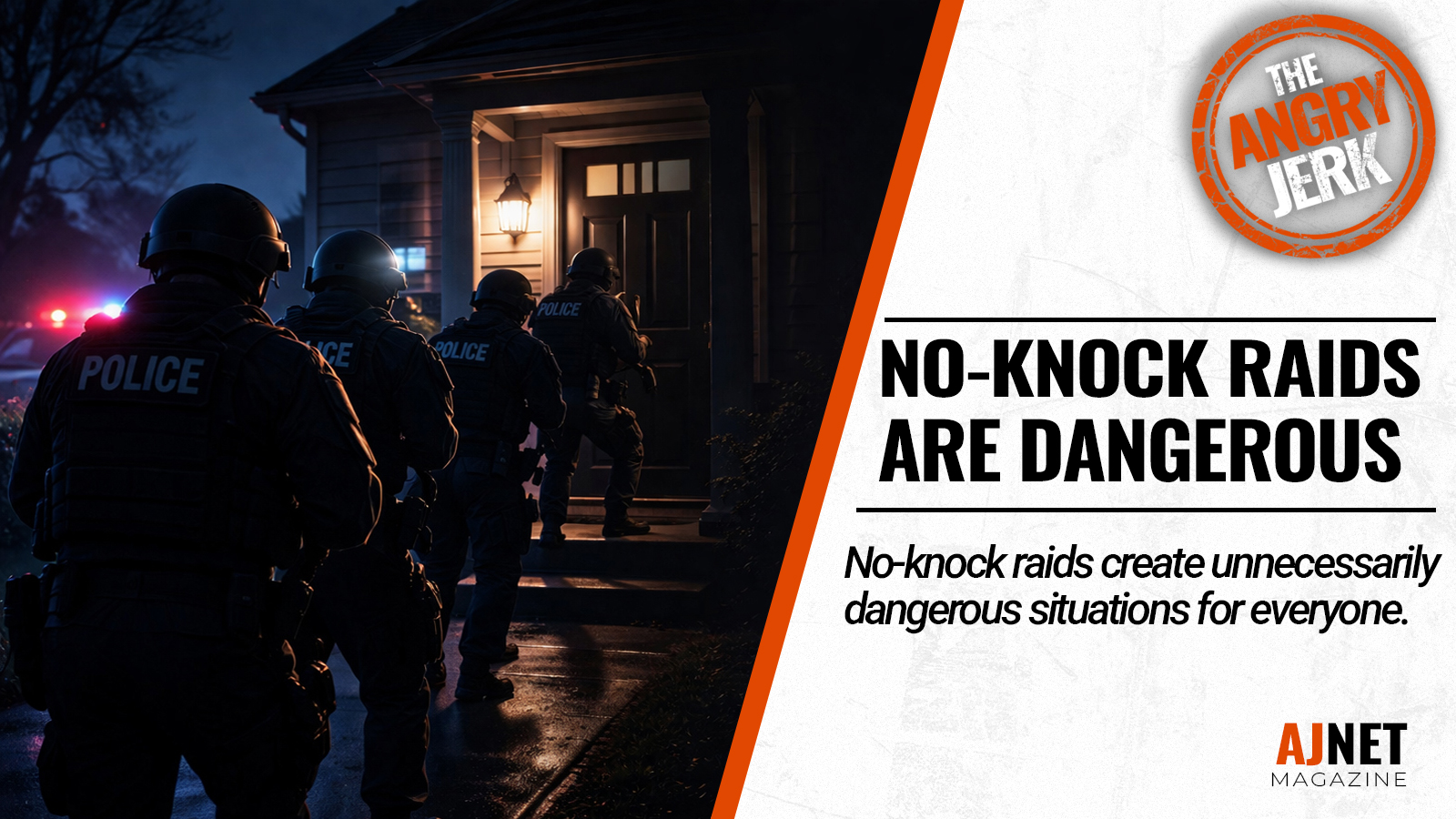
No-knock raids are bullshit.
I get the idea behind them. In theory, you don’t want to give someone time to flush drugs, grab a weapon, or barricade themselves. If you hit them fast and catch them off guard, you reduce the risk to officers and secure the scene quickly.
On paper, this sounds great. In reality though, it creates one of the most dangerous situations you can think of.
I’ve been loosely following the case involving Nicholas Sperando, a Philly guy who was arrested on drug charges, mostly because I know someone who knows someone who knows him. From what’s been reported, the police booted his door down without warning, and he pulled a gun and fired on them. I’m not defending selling drugs or any of the other shady stuff he was involved in. But if you’re living that kind of life and your door gets blown open in the middle of the night, your first thought isn’t “oh, that must be the police executing a lawful warrant.” Your first thought is “oh shit, someone’s here to rob me.”
This is the problem with no-knock raids. They create a situation where both sides think they’re defending themselves. The police are going in expecting a threat. The person inside hears their door get kicked in and assumes they’re under attack. You’ve taken two groups of people, put them into a high-adrenaline situation with next to no information, and expected it to go smoothly. That’s about as effective as flipping a coin. Heads, someone gets shot. Tails, someone still gets shot.
It’s not just criminals this applies to. I live in Philadelphia. If someone boots down my door at 3 AM, I’m not going to verify credentials. I’m assuming it’s a burglar, and I’m grabbing a weapon. I’d say that’s normal behavior for most people. You hear a crash, you hear shouting, and your brain goes straight to survival mode. That split second matters, and you don’t waste time analyzing whether the guy who just busted your door down with a gun drawn has a badge or not.
Let’s take that a step further. What’s stopping actual criminals from using the exact same tactic? All they have to do is kick in a door, yell “POLICE,” and hope the person inside hesitates just long enough. That’s not some far-fetched scenario. By normalizing forced entry without clearly identifying yourselves, you’re basically handing burglars a script that they can take full advantage of.
The justification for no-knock raids is always the same. “We need the element of surprise.” “The suspect might be armed.” “We can’t give them time to react.” Okay, fine. That’s why you plan. Carry out some basic surveillance first, develop a plan of attack before you make your move. The answer to a potentially dangerous suspect shouldn’t be to create an even more dangerous situation and hope you come out on top. You’re arresting a drug dealer, not storming David Koresh’s compound. There are very few situations where kicking someone’s door in without identifying yourself first is the best available option.
When it goes wrong, it goes really wrong. Look at cases like Breonna Taylor or Amir Locke. Different circumstances, but the same core issue: Confusion, split-second reactions, and people ending up dead because nobody had a clear understanding of what was happening in that moment. These aren’t isolated incidents. They’re the natural outcome of a tactic that relies on shock and force instead of clarity.
What happens when the police hit the wrong place? Police execute warrants off outdated information all the time. I still get mail for people who haven’t lived here in over ten years. Am I supposed to sit here and hope that none of these people screw up somewhere down the line, because it could end with my door getting kicked in at 3 in the morning and me getting shot dead because I reacted to what looked like a break-in?
No-knock raids aren’t some precise, surgical tactic. They’re a blunt instrument. Sometimes they work, but when they don’t, the consequences are severe, and usually permanent.
You’re putting both officers and civilians in unnecessary danger. And then when everything goes sideways, everyone acts like it was some unpredictable tragedy instead of the obvious result of a bad approach. We already know how these situations play out. We know people panic when they think someone is breaking into their home. We know police are going in expecting violence. We know mistakes happen, bad intel happens, wrong addresses happen. Yet we keep using a tactic that turns split-second confusion into a life-or-death situation for everyone involved.
If your strategy depends on terrifying people so badly that they can’t react properly, then maybe the strategy itself is the problem.

More from Angry_Jerk



Don't miss any new posts. Join AJnet Magazine's mailing list and receive updates straight to your inbox once a week!